The link between hearing loss and dementia
September 29th, 2025It’s a well-known fact that hearing loss is common in older adults; it’s a natural and biological part of ageing. Studies have revealed that there is a link between hearing loss and dementia.
Hearing loss is a risk factor for developing dementia, not a dead cert that you will get the disease, and experts have revealed that using hearing aids may help with cognitive decline.
Have your heard of the word presbycusis?
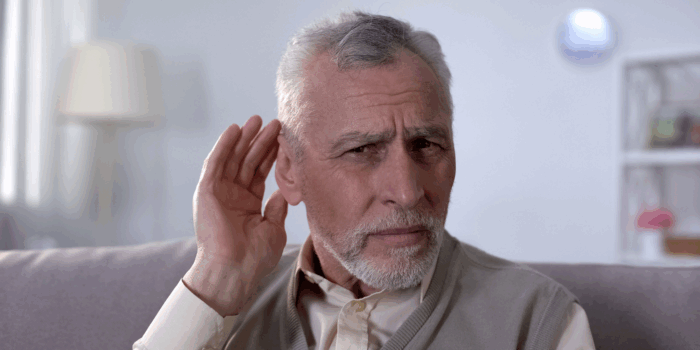
Adult hearing loss, also known as presbycusis, can begin in your 30s, most commonly in the 40-65 age group. It’s normally a gradual change that affects both ears, and people may not realise it, but those around them do. They notice you repeatedly saying pardon? Sorry, I didn’t quite hear that. Could you please turn the TV up? Does that sound familiar?
Do you keep having to ask people to repeat themselves?
Do those around you ask sarcastically, “Are you going deaf?”. A cheeky quip that could be an early sign, so don’t brush it off.
Gradual hearing loss can be a scary experience. Some people become very self-conscious and embarrassed. They start to withdraw from social situations and become more isolated over time. Hearing loss is a risk factor for dementia and so is social isolation and depression. To prevent cognitive decline, it is really important to keep interacting with people, even if you are struggling to hear.
What is hearing loss?
Hearing loss occurs when areas of the brain that help us process sounds and speech have to work harder to understand what sounds are. Eventually, that demand becomes too much and makes changes to the brain, and we lose our ability to hear.
Hearing loss is also associated with illness such as diabetes and cardiovascular disease or damage to sensory receptors (hair cells) from long-term exposure to things such as loud music or tools and machinery. The term for this is Noise Induced Hearing Loss (NIHL). The World Health Organisation (WHO) documented that 1 billion people worldwide are at risk of NIHL.
There are 2 types of hearing loss.
Peripheral hearing loss and central hearing loss.
- Peripheral hearing loss happens when there is a reduced ability of the ears to detect sound. Hearing aids can help with that
- Central hearing loss happens when problems with processing sounds in the brain cannot be corrected with hearing aids. This can be an early sign of dementia when parts of the brain are affected by the disease
There are more than 56 million known cases of hearing loss in the world. There have been numerous studies on hearing loss and dementia in the last 15 years. A recent study published in ‘Nature Ageing’ took a different approach to other studies, examining adults in their 40s and 50s.
In relation to the study, Alison R. Huang, PhD, MPH, an assistant program director of NYU Langone Health’s Optimal Ageing Institute in New York, said, “The novelty is this study provided a much longer follow-up of hearing loss than most studies we have, so we’re able to look at the outcome of dementia that far out.”
The research took place at France’s Université Paris Cité; they used data from 2 UK studies, the Whitehall II and UK Biobank. 385,000 participants aged between 40 and 69 completed questionnaires about their hearing abilities every 4-5 years over a period of 25 years and there were interesting findings. Read more about the study and the results here.
At the end of the study, Huang concluded that there’s no definite explanation as to why there is an increased risk of developing dementia from hearing loss, although, she feels they are a step closer to understanding.
Listen up, because there are some simple steps you can take to protect your hearing.
Any noise of 85 dB (decibels) or over is too loud and can damage your hearing. A decibel is the unit of measurement for sound. The decibel of a whisper is 30dB, conversation 60dB, traffic noise 85dB, music concert 100dB, headphones on full volume 110-120dB and a jet engine or gunshot is 130dB.
Hearing damage is often preventable with ear protection, whether you are at an event or in a working environment. Here’s our top tips so you can still hear what people are getting up to.
- Turn down that volume! It’s very tempting to pump out those tunes, but ear health comes first so keep your music at a sensible volume
- Use earplugs or noise-cancelling headphones in loud settings, such as concerts, sports events or in the workplace
- Give them a break! Enjoy quiet time; sometimes silence is golden. Clear your mind of busy outside noise and only hear your thoughts
- Educate yourself and make good choices; choose headphones over earpods, for example. Large headphones are better for you than those inserted into the ear
Hearing concerns and solutions.
Are you experiencing a ringing or buzzing in your ears? It could be tinnitus.
Tinnitus isn’t classed as a serious condition and can get better by itself; it can be in one or both ears. The ringing, buzzing, whooshing, humming or throbbing sound as a result of having tinnitus doesn’t come from an outside source. It’s a noise from inside your head and thankfully, it normally isn’t there all the time.
Is your hearing muffled or distorted? Do you find it difficult to hear in groups or noisy situations, and do you find yourself asking for people to repeat themselves? If so, there could be a simple fix to help you hear things more clearly. Hearing aid technology is advancing and you would be amazed.
Gone are the days when your only choice was to wear a bulky, basic analogue hearing aid. Now, there are some impressive digital hearing aids that can shape sounds and filter out unwanted noise. It has been proven that wearing a hearing aid can help to combat cognitive decline. The aid prevents cognitive overload and allows a person to stay socially interactive. There are 5 main types of hearing aids:
- Receiver in the canal (RIC)
The RIC fits behind the ear and contains a microphone and amplifier. Electrical signals are sent to a speaker inside the ear, and sound is then produced
- Behind the ear (BTE)
Similar to the RIC, but the speaker is not inside the ear; it’s in a case behind the ear, and sound travels into a tube then into the ear
- In the ear (ITE)
The ITE hearing aid fits inside the bowl of the ear called the concha. It contains the microphone, amplifier and speaker
- Completely in the canal and instant fit (CIC)
This is a small hearing aid option that only fills the ear canal and is almost unnoticeable
- Invisible in the canal (IIC)
The IIC is the smallest of hearing aids and fits deep into the ear canal. It’s the most discreet type of hearing aid available
Hearing loss can affect a person’s work, relationships and quality of life. It’s very important to look after your hearing. An audiologist can advise you about proactive changes to make sure that you hear all the gossip.
References
https://www.nature.com/articles/s43587-025-00914-1
https://www.goodhousekeeping.com/health/wellness/a66389475/study-links-hearing-loss-to-dementia/
https://www.hearingaid.org.uk/hearing-loss-awareness/how-to-protect-your-hearing





Download the latest FREE AGING MATTERS MAGAZINE
V3 issue 42 2023
- Advertisement -