Anti-ageing laser treatment
September 9th, 2025With age, our bodies change noticeably. Some people embrace ageing naturally, while others choose aesthetic treatments to reduce visible signs of ageing, correct imperfections, or enhance features.
Laser treatment on the largest organ in the body, the skin.
Experts can use ablative and non-ablative focused light energy (laser treatment) to help the skin appear less wrinkled, improve elasticity, and address problem areas.
Laser treatment also addresses sun damage, scars, rosacea, acne, age spots, and discoloration. It stimulates collagen and promotes brighter, more radiant skin.
What’s the difference between ablative and non-ablative laser treatment?
Ablative treatment works mainly on the outer skin layer, and non-ablative treatment works deep below the surface of the skin.
There are two main ablative laser therapy treatments. Carbon dioxide (CO2), where lasers penetrate the skin, heating the dermis and removing the epidermis for skin regeneration and to stimulate collagen growth. Most commonly used for deep wrinkles, severe sun damage, and acne scars.
Erbium YAG (Er: YAG) where lasers remove the outer layers of the skin by vaporising water in the tissue. Most commonly used for skin resurfacing to reduce wrinkles and pigment changes. It is less aggressive than CO2 laser treatment.
There are four main non-ablative laser therapy treatments. Intense Pulsed Light (IPL), also known as Broadband Light Spectrum (BBL). It targets blood vessels and stimulates melanin in the skin. Nd: YAG laser treatment sends long wavelengths deep into the skin and stimulates collagen. Commonly used for spider veins, rosacea, and pigmentation. Pulsed Dye Lasers (PDL) are vascular lasers of yellow light; they destroy broken blood vessels beneath the skin and vascular lesions. Erbium YAG (Er: YAG) non-ablative laser treatment for superficial resurfacing – it’s a milder treatment for minor wrinkles and requires less recovery time.
In addition, there are fractional ablative and non-ablative laser treatments. They deliver energy in a fractional pattern. It creates tiny columns of treated tissue rather than the whole surface of the skin. This is the preferred treatment for collagen stimulation and skin rejuvenation because it has a shorter recovery time and a lower risk of side effects.
What causes the skin to age?
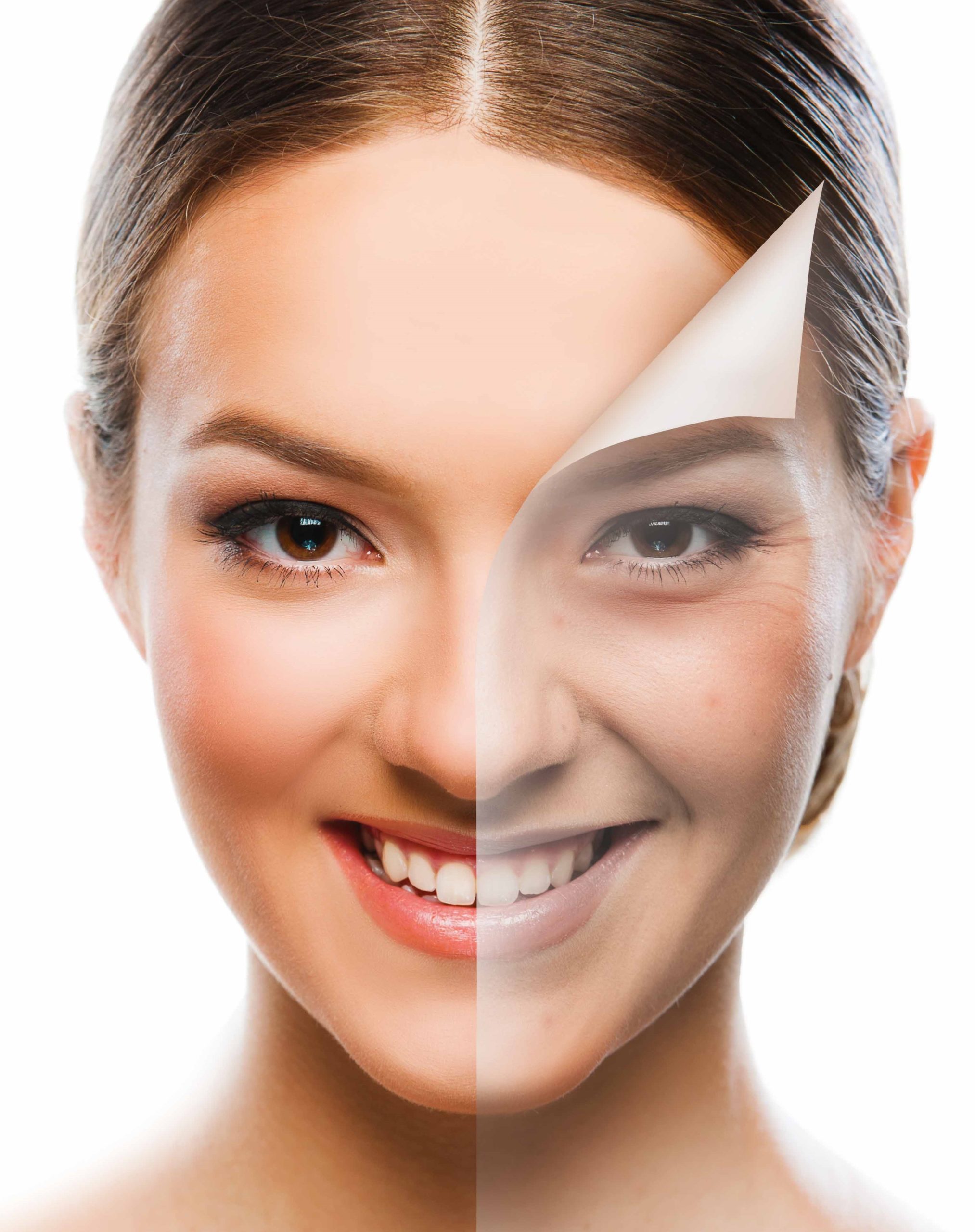
As you age, the building blocks of the skin – collagen and elastin start to deplete, and connective tissue breaks down. In the face, there is a loss of fat and bone, and we start to see fine lines, deep lines, wrinkles, and sagging skin.
Your skin starts to show signs of ageing in your 20s – a slight dullness due to sun exposure, lack of sleep, stress, and lifestyle choices. In your 30s, fine lines and wrinkles start to become more obvious, and there is a loss of volume in the cheeks. Under-eye changes become more prominent, and the skin repair system slows down. When you reach 40, you start to notice major changes in the firmness of your skin. There is a loss of volume and elasticity, leading to sagging skin and more pronounced wrinkles. Some people develop a skin condition called ‘Melasma’, characterised by brown or blue/grey patches or freckle-like spots. In your 50s, women experience a hormone shift, declining estrogen and increased levels of androgens, which affects the skin. The skin becomes thinner and less elastic, and it becomes very dry with excess pigmentation from sun damage. When you hit 60 and beyond, the skin dehydrates even more. Self-care and aesthetic treatments can help to hide the imperfections of the ageing skin.
What treatment is best for which problem areas?
When considering laser treatment, a bespoke treatment plan will be created to suit your skin and area of concern. Experts might recommend the following:
Deep wrinkles – Fractional CO2 or erbium lasers with a downtime of 7-10 days. Long-lasting effects and continual improvements.
Sun damage and deep wrinkles – Full field Erbium YAG laser treatment with a downtime of 2 weeks +.
Fine lines – Halo fractional ablative and non-ablative lasers with a downtime of 3-5 days. Instant noticeable improvement.
Scars – Fractional Erbium YAG lasers cause less damage than the CO2 and can do more precise resurfacing with a downtime of 5-7 days.
Spider veins – Intense Pulse Light (IPL) treatment causes tiny veins to disappear instantly, and others in a few days to a couple of weeks.
When choosing what type of aesthetic laser treatment to have, there are some important considerations:
- Cost
- Specific treatment
- How many treatments are needed?
- Area on the body
- Down time (recovery time)
- Side effects
- Potential problems
Skin laser treatment does come with some risks, including inflamed, swollen, itchy and painful skin. There is a risk of infection, changes in skin colour, scarring, blistering and bruising. Those risks and likelihoods would be discussed with you at your appointment with an aesthetic practitioner. You should seek advice and recommendations before you commit to treatments.
Laser skin treatment might not be suitable for people who:
- Have taken isotretinoin medication in the last year
- Have connective tissue disease
- Have a history of keloid scarring
- Had radiation therapy
- Prone to cold sores and had a recent outbreak
- Have very dark skin
- Are breastfeeding
- Are pregnant
- Have a history of outward-turning eyelid ectropion
Aesthetic laser treatments can be expensive and ongoing. Experts say that the most cost-effective and successful way to approach skin laser treatment is by starting an anti-ageing skin care regime at a young age, so as to build a strong foundation to work on.
Amir M Karam, MD, is a renowned facial plastic surgeon based in San Diego with over twenty years of experience in facial rejuvenation. He’s one of the top face-lift surgeons in the world. On YouTube, in a video about different options of laser treatments for skin rejuvenation, he explained that whilst the treatments he performs are effective, no matter how many times you return for more treatments, the effects won’t last forever. Starting a strict skincare routine at a young age builds a strong foundation, so aesthetic treatments are more effective and last longer.
What can you do to help improve your skin without aesthetic treatments?
It’s a minefield in the skincare product range. Firstly, there is a difference between an anti-wrinkle cream and an anti-ageing cream. The anti-wrinkle cream deals with just that, whereas the anti-ageing cream tackles fine lines, wrinkles, loss of density, dullness, and dryness.
As your skin starts to show signs of ageing, skin care adjustments should be made.
Your skin thins with age, so the exfoliants and cleansers you use in your 20s and 30s should be less abrasive in your 40s and beyond.
For the face and neck, moisturiser is essential day and night. An anti-ageing night cream is best at night because that is when there is the most cellular activity. For daily moisturisers, look for products that contain SPF, antioxidants, vitamin C, hyaluronic acid, and collagen. Select an eye cream that is most suitable for your skin type.
Not sure what to buy? Here’s a useful guide:
- The best skincare products according to the Cosmopolitan beauty team
https://www.cosmopolitan.com/uk/beauty-hair/skincare/g14191580/best-skin-care-products/
- The best skincare products and reviews from the Independent
https://www.independent.co.uk/extras/indybest/fashion-beauty/skincare
- The best skincare products from Byrdie for 2025
https://www.byrdie.com/best-skincare-products-2025-11748204
You should also feed your skin from the inside out. Eat a diet rich in anti-oxidants, healthy fats, and proteins, avocados, berries, leafy greens, fatty fish, nuts, seeds, salmon, citrus fruits, and orange vegetables to help support collagen production. Stay hydrated and try to drink 6-8 glasses of water a day.
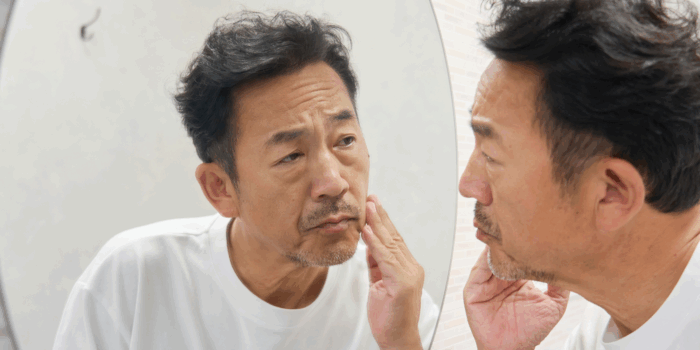
It’s normal to get to a stage in life where you look in the mirror and the person staring back at you is becoming a different version of you, and when you apply moisturiser onto your skin, you notice more imperfections. That’s life. Choose to be the best version of you, whatever your age – life is for living.
References
https://www.mayoclinic.org/tests-procedures/laser-resurfacing/about/pac-20385114
https://www.ncbi.nlm.nih.gov/books/NBK532248/
https://www.youtube.com/watch?v=LWgWHWdVHfg
https://www.realsimple.com/beauty-fashion/skincare/anti-aging/aging-skin-concerns
https://www.bupa.co.uk/health-information/surgery-and-procedures/laser-facial-resurfacing
https://www.drdarrenmckeown.com/laser-dermatology/best-laser-resurfacing-treatment-for-wrinkles/
https://www.theharleystreetdermatologyclinic.co.uk/conditions/spider-veins/
https://www.nhs.uk/live-well/eat-well/food-guidelines-and-food-labels/water-drinks-nutrition/

Download the latest FREE AGING MATTERS MAGAZINE
V3 issue 42 2023
- Advertisement -